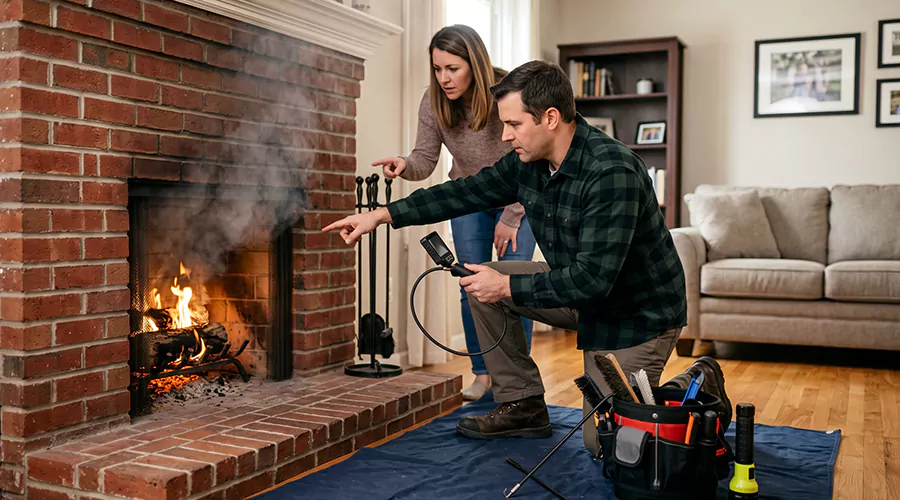
Why Is Smoke Coming Back Into My Fireplace?
Identify why smoke is coming back into your fireplace, including poor chimney draft, blocked flues, inadequate ventilation, damp wood, and downdrafts.




Based on 500+ Reviews

Proudly American
Owned & Operated

Smoke coming back into a fireplace is a common problem that can make using a fireplace uncomfortable and may indicate an issue with the chimney, airflow, or ventilation system. A properly functioning fireplace should pull smoke upward through the chimney and release it outside the home.
When smoke enters the room instead of moving up the chimney, it usually means the fireplace is not getting enough airflow or the chimney is unable to create a proper draft. In some cases, fireplace smoke chamber repair may be needed if problems within the smoke chamber are affecting the movement of smoke toward the chimney.
Common causes include chimney blockages, dirty flues, incorrect damper settings, chimney design issues, and problems with the home's ventilation.
Understanding why smoke is coming back into your fireplace can help identify the cause and determine the right solution.
A fireplace works through a process called draft. When a fire burns, hot air and smoke rise through the chimney because warm air is lighter than cool air. This creates an upward flow that pulls smoke out of the fireplace.
Proper draft depends on:
When something interrupts this airflow, smoke may flow back into the room.
Several issues can cause fireplace smoke to enter the home.
Common causes include:
The damper controls airflow between the fireplace and chimney.
If the damper is closed or not fully open, smoke cannot properly escape.
Signs of a damper problem include:
Before using the fireplace, always make sure the damper is fully open.
If the damper is damaged or stuck, it may require repair or replacement.
A chimney blockage can prevent smoke from traveling upward.
Common chimney blockages include:
A blocked chimney can cause:
A chimney inspection can help identify blockages.
Wood-burning fireplaces produce smoke containing gases and particles that can stick to chimney walls.
Over time, this creates creosote buildup.
Heavy creosote deposits can:
Regular chimney cleaning helps remove buildup and maintain proper airflow.
A cold chimney may struggle to create enough upward draft when a fire is first started.
This commonly happens when:
A cold air column inside the chimney can push smoke back into the room. Allowing the chimney to warm gradually may help improve draft.
A fireplace requires oxygen to burn properly. If the room does not provide enough replacement air, the fireplace may pull air backward through the chimney.
Possible causes include:
Signs of insufficient air supply include:
Negative air pressure occurs when more air leaves the home than enters.
Common causes include:
When negative pressure develops, the home may pull air down the chimney instead of allowing smoke to rise. Turning off exhaust fans or providing additional air may help improve airflow.
The height of a chimney affects how well it creates draft. A chimney that is too short may not produce enough upward airflow. Problems caused by insufficient chimney height include:
Chimney height and surrounding structures can affect airflow.
Certain weather conditions can push air downward through the chimney.
Downdrafts may occur because of:
A chimney cap designed for wind protection may help reduce some downdraft problems.
The chimney and fireplace must be properly matched.
If the flue is:
Incorrect sizing can lead to:
A professional evaluation may be needed for sizing issues.
The type of firewood used can affect smoke production.
Wet wood creates:
Signs of wet firewood include:
Using properly seasoned firewood helps create cleaner combustion.
A dirty fireplace and chimney can contribute to smoke problems.
Buildup may include:
Regular cleaning helps maintain airflow and fireplace performance.
Damage to chimney components can affect how smoke exits.
Possible problems include:
Chimney damage can affect both airflow and safety.
Homeowners can check several simple issues:
Make sure the damper is completely open before starting a fire.
Look for visible debris or signs of animal activity.
Use dry, seasoned wood instead of freshly cut wood.
Turn off exhaust fans and see if airflow improves.
Pay attention to whether smoke appears:
This can help identify the cause.
A properly installed chimney cap should not cause smoke problems.
However, issues can occur if:
A chimney cap should protect the chimney while allowing proper ventilation.
The solution depends on the cause.
Possible fixes include:
A chimney inspection can help identify problems that are not visible.
Professional evaluation may be needed when:
Persistent smoke problems should not be ignored because they may indicate airflow or chimney safety issues.
Regular maintenance can help prevent smoke from coming back into the fireplace.
Helpful steps include:
Proper chimney care helps maintain good draft and fireplace performance.
Smoke coming back into a fireplace is usually caused by poor airflow, chimney blockages, damper problems, insufficient ventilation, or draft issues. Common causes include creosote buildup, cold chimneys, negative air pressure, improper firewood, and damaged chimney components. Identifying the cause is important because continued smoke problems can affect fireplace performance and indoor air quality. Regular chimney inspections, proper maintenance, and correcting airflow problems can help keep smoke moving safely through the chimney instead of back into the home.
Smoke may enter the room because of a blocked chimney, closed damper, poor draft, ventilation problems, or wet firewood.
Improving draft may involve cleaning the chimney, opening the damper fully, improving airflow, and addressing chimney design issues.
Yes. Creosote buildup and debris can restrict airflow and prevent smoke from exiting properly.
It is best to identify and correct the cause of the smoke problem before continuing regular fireplace use.
Yes. Strong winds can create downdrafts that push smoke back through the chimney.
A properly installed chimney cap can help protect the chimney, but it will not fix all draft or airflow issues.
Identify why smoke is coming back into your fireplace, including poor chimney draft, blocked flues, inadequate ventilation, damp wood, and downdrafts.
